
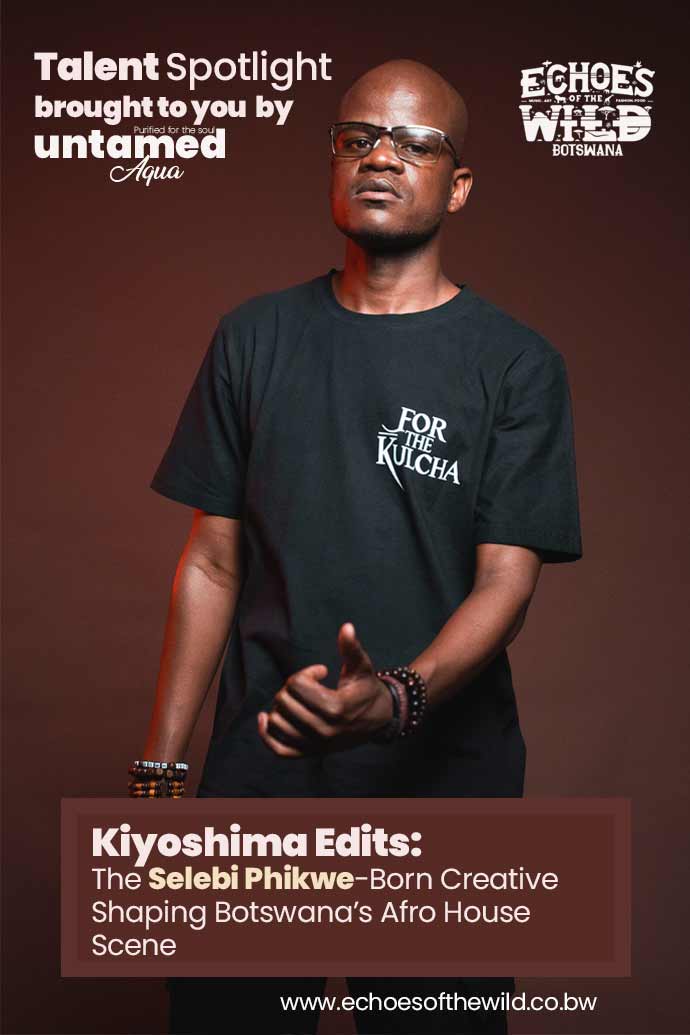
There’s a certain kind of artist who doesn’t just make music—they shape movements. In Botswana’s steadily rising Afro House and electronic music scene, Kiyoshima Edits is carving out that space with intention, discipline, and a deep-rooted love for the craft.
Born Olefile Mmanoko in Selebi Phikwe, Kiyoshima’s story is grounded in authenticity. Long before the studio sessions and curated events, his journey began on the dance floor in the early 2000s. Around 2003, he was immersed in dance culture, a space that would unknowingly lay the foundation for everything to come. By 2008, his curiosity evolved into something more technical—automix, DJing, and eventually music production.
Today, he stands as a producer, singer-songwriter, and event organiser—but he resists boxing himself into any single identity.
“At the core, it’s all about music,” he explains. “All these roles—it’s one department with a full spectrum. Everything serves one purpose.”
That purpose is evident in the way his sound moves. Raised in an era where dance was central to youth culture, Kiyoshima was naturally drawn to Afro House and electronic music. Influenced by the likes of DJ Cleo, DJ Fresh, Bujo Mujo, and Liquideep, his sonic identity is both familiar and distinct. What sets him apart, however, is what he describes as an “unexisting language”—a vocal expression that leans more into emotion than literal meaning, giving his music a unique and almost spiritual edge.
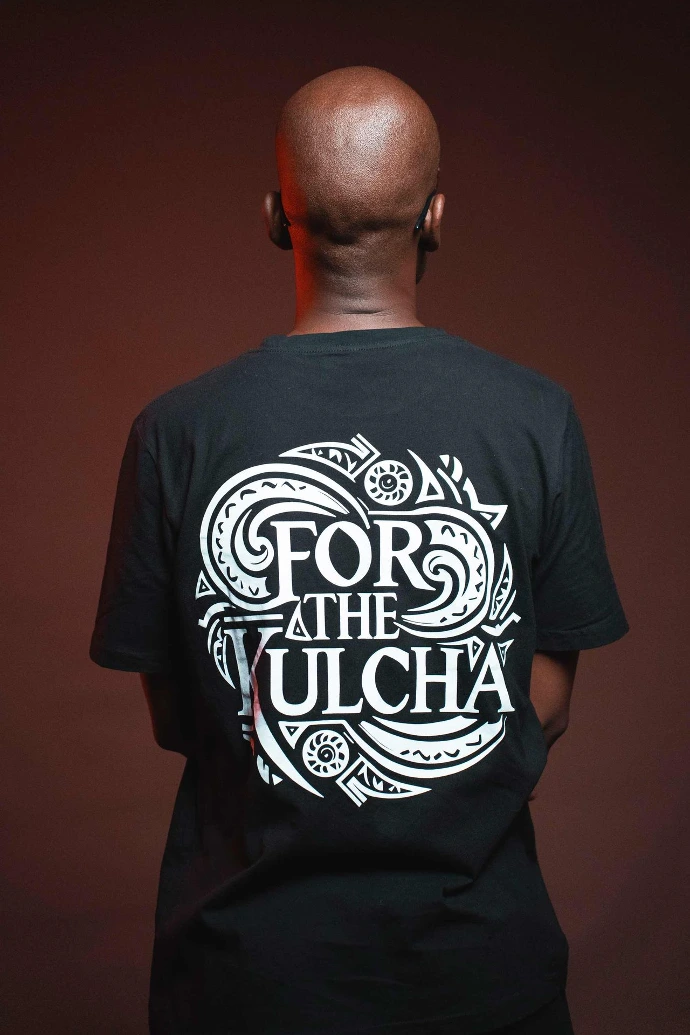
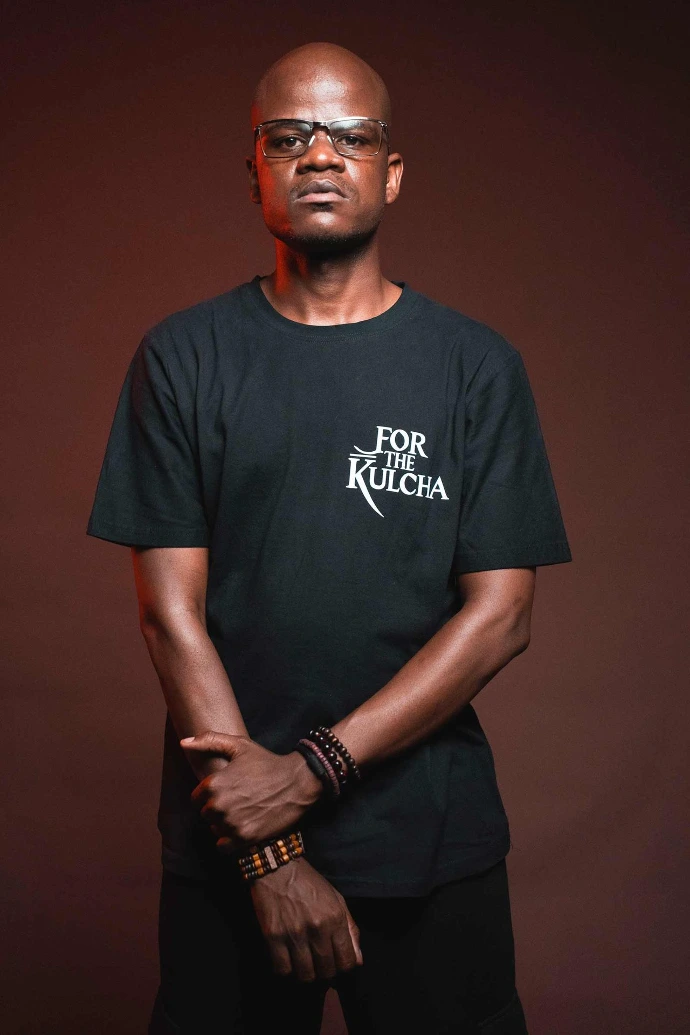
His breakthrough moment came in 2015 with the release of “Don’t Give Up,” a collaboration with Tswex Malabola and SoulKid BDub. More than just a debut, the track was born from a deeply personal place. At the time, he was navigating life’s challenges, and the song became both an outlet and a declaration of resilience. It would go on to open doors, marking the true beginning of his recording journey.
Beyond his own artistry, Kiyoshima has developed a reputation for identifying and nurturing talent. It’s a skill he traces back to his youth—organising dance crews in his community and bringing people together around a shared passion. But for him, talent alone is never enough.
“Success comes with character,” he says. “You can be talented, but if your character is off, it will always reflect in your results. Humility takes you far.”
This perspective feeds directly into his view of Botswana’s music industry. Creatively, he believes the country is in a strong position. Production quality, he notes, is now comparable to international standards. The real challenge lies elsewhere.
“We’re lacking support—especially financially,” he explains. “The resources to take our music further are still limited.”
Institutions meant to support creatives, such as arts councils and music bodies, still have ground to cover in meeting artists halfway. Without that backing, scaling talent into sustainable careers remains an uphill battle.
When it comes to branding and marketing, Kiyoshima offers a different take. He doesn’t believe local artists are necessarily getting it wrong—rather, they are trying to do too much on their own. From visuals to promotion, many creatives operate in isolation, which ultimately limits their reach.
His solution is rooted in collaboration.
“There are designers, videographers, influencers, bloggers—people who specialise in these things. Artists need to work with them to deliver better products and reach wider audiences.”
That collaborative mindset is at the heart of one of his most impactful ventures: Afro Down Town. Created as a platform to spotlight Botswana’s Afro House and Afro Tech sound, the event was designed with a clear purpose—to give local music a primary stage, not a supporting role.
From its inception, Afro Down Town prioritized sets that were predominantly made up of Botswana house music, a bold move that challenged both artists and audiences to fully embrace local sound. And the timing couldn’t be more relevant. Botswana’s Afro House is increasingly finding its way into international spaces, with local productions forming a significant part of global label catalogues.
Despite speculation about its future, Kiyoshima is clear—Afro Down Town is evolving, not ending.
“We’re working on new strategies to make it better. We need something that will stay, feed, and inspire future generations.”
As for what’s next, 2026 is already shaping up to be a busy year. With multiple collaborations in the pipeline and his role as an A&R at Vibro Melodic Records, Kiyoshima is expanding his influence behind the scenes—helping usher in new talent while continuing to release his own music.
He also aligns himself with broader cultural movements, including Echoes of the Wild, which he describes as a powerful platform for showcasing Botswana’s identity through music and experience. His commitment to the culture runs deep—so much so that he refers to himself, half-jokingly but with clear intent, as a “self-proclaimed stage manager” for the movement.
Looking ahead, his vision is both ambitious and grounded in reality. He believes Afro House in Botswana is not just growing—it is the future. With artists like Robotic OFC gaining international recognition, the path is becoming clearer for others to follow.
And if that trajectory continues?
Global awards, even Grammys, may no longer feel out of reach.
For now, Kiyoshima Edits remains focused on the work—building, collaborating, and pushing boundaries. His journey is a reflection of where Botswana’s music scene is today: rich in talent, full of potential, and steadily finding its voice on the world stage.
The sound is here. The movement is growing. And Kiyoshima Edits is right at its center.